Wilfried Granier is the Founder and CEO of Superprof, a global marketplace that connects millions of students with teachers across more than 70 countries. He launched the company after experiencing firsthand how difficult it could be to find the right teacher, even in well-connected markets, and set out to build a platform that would make learning more accessible, transparent, and scalable.
Under his leadership, Superprof has grown into one of the world’s largest tutoring platforms, spanning thousands of subjects including academic tutoring, languages, music, sports, and professional skills. The company has expanded internationally while maintaining a disciplined, long-term approach to growth, supported by a model that emphasizes strong marketplace dynamics and sustainable development.
Granier has focused on building a global organization capable of operating across diverse markets, with a team representing more than 40 nationalities. His approach combines a belief in the importance of human connection in learning with a commitment to using technology to improve access and discovery. Through Superprof, he continues to work toward a broader vision of making knowledge accessible to anyone, anywhere.
Tell us about your company and the problem it solves, or its benefit to learners or educators.
Superprof was built to solve a problem that seems simple on the surface but becomes surprisingly complex in practice: finding the right teacher. For most learners, discovery is fragmented, shaped by geography, personal networks, or chance encounters, which means that even when high-quality teachers exist, they are often invisible to the people who need them.

We approached that problem by building a global marketplace that connects students and teachers into the same environment, where discovery becomes structured, transparent, and scalable. Today, Superprof operates in more than 70 countries and spans thousands of subjects, from academic tutoring and languages to music, sports, and professional skills. What connects all of this is a single idea, which is that learning does not happen in one format or at one stage of life, and the system that supports it needs to be equally flexible.
A defining feature of the platform is the mutual selection model, where students choose teachers based on profiles, experience, pricing, and reviews, while teachers retain the ability to accept students based on fit and expectations. This dynamic creates a more balanced relationship from the beginning, which tends to lead to stronger engagement and better outcomes over time. Rather than forcing a match, the platform facilitates alignment.
As the marketplace grows, it benefits from network effects that reinforce its value. Each new teacher expands the range of expertise available, which attracts more students, and each new student increases demand, which encourages more teachers to join. Over time, this creates a self-reinforcing ecosystem where access improves continuously without requiring a fundamentally new model.
At a broader level, Superprof plays a role in expanding access to knowledge. When geography is no longer a constraint, learners can find expertise that may not exist in their local environment. The result is not just convenience, but a more equitable distribution of learning opportunities across regions and backgrounds.
Where did the idea come from to create your company?
The starting point was very personal. I was trying to find a guitar teacher and realized that, despite living in a well-connected environment, the process was far more difficult than it should have been. There was no clear way to compare teachers, understand their experience, or even know who was available. The information existed, but it was scattered and inconsistent.
What began as a practical frustration quickly revealed something more fundamental. The same challenge applied across subjects, whether academic, creative, or professional, and across geographies, regardless of how developed the local market might be. People wanted to learn, teachers were willing to teach, but there was no efficient system connecting the two.
From the beginning, the ambition was not to solve a single use case, but to build a platform that could address this discovery problem at scale. That meant thinking beyond a directory or listing service and focusing instead on creating a trusted community where interactions could grow organically. The goal was to design a system that could adapt to different types of learning, from exam preparation to personal development, while maintaining a consistent experience.
That perspective also reflects a broader belief about learning itself. It is ongoing, diverse, and often non-linear, which means that any platform supporting it needs to accommodate a wide range of goals and formats. By focusing on the connection between student and teacher, rather than on a specific subject or curriculum, we were able to build something that could expand naturally across markets and disciplines.
Tell us about one challenge and how you overcame that challenge.
One of the most persistent challenges has been building and aligning a global organization while expanding into dozens of countries, each with its own cultural expectations, communication styles, and educational norms. As the company grew, the complexity of operating across time zones and languages increased in ways that were not always visible at the beginning.
When a team is small, alignment happens naturally through proximity and constant interaction. As we expanded, that dynamic no longer held, and we began to see the early signs of fragmentation, particularly in communication and coordination. Teams could move quickly within their own context, but without shared systems and clarity, that speed did not always translate into collective progress.
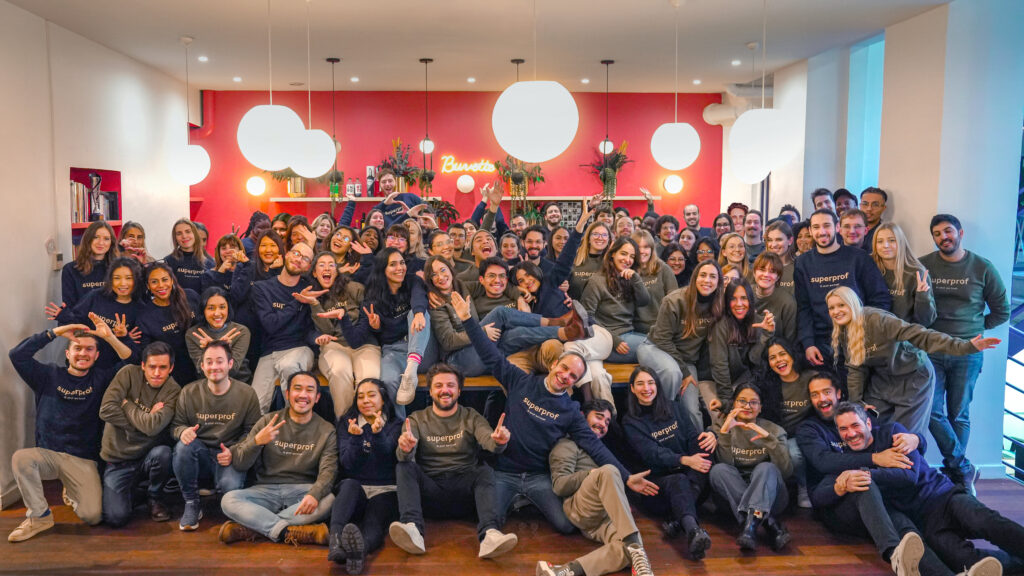
Addressing this required a shift in how we approached organization and structure. We invested in clearer processes, more centralized systems, and a shared understanding of priorities, while still preserving the flexibility needed to adapt to local markets. The balance between centralization and local execution became essential. Strategy and core systems are defined globally, which allows us to move efficiently, while implementation remains sensitive to regional differences.
What made this transition effective was a strong sense of shared purpose. The team is exceptionally diverse, and while their perspectives and experiences differ, they are aligned around the idea of improving access to knowledge. That common mission creates cohesion even when the operational environment is complex.
Over time, this approach has allowed us to scale without losing effectiveness, because the organization is designed to absorb complexity rather than react to it.
What are you most proud of or what is your company’s greatest achievement?
The achievement I value most is the team we have built. It is easy to point to growth metrics or geographic expansion, but those outcomes are a reflection of something deeper, which is the ability of a diverse group of people to work together toward a shared objective over a long period of time.
Today, the organization includes individuals from more than 40 nationalities and operates across multiple languages and markets. That diversity is not only representative of our global presence, but also essential to how we function. Understanding local user behavior, expectations, and learning habits requires perspectives that cannot be centralized in a single location.
What makes this particularly meaningful is the alignment around purpose. Despite differences in background and expertise, the team shares a commitment to helping people access knowledge and develop new skills. That alignment has supported consistent growth, because it informs both strategic decisions and day-to-day execution.
The culture has also evolved in a way that reflects the company’s scale. In the early days, speed and instinct were dominant. As the organization grew, those qualities were complemented by structure, accountability, and long-term thinking. Rather than replacing the original culture, this evolution has strengthened it, allowing the company to operate effectively in a more complex environment.
In that sense, the team is not only an outcome of the company’s success, but the primary driver of it.
Where do you see your company in five years?
Over the next five years, the objective is to extend our presence globally so that the platform is accessible in every country. The underlying need we address is universal, which means that the opportunity to connect learners and teachers is not limited by geography, only by the systems that enable that connection.
At scale, this translates into building a community that could include tens of millions of teachers, each contributing their expertise across a wide range of subjects and skill levels. As that community grows, the platform becomes more valuable, because it increases the likelihood that any learner can find the right match, regardless of what they are trying to learn.
Technology will continue to play an important role in supporting this growth, particularly in improving how students and teachers find each other. Advances in personalization and search can make the matching process more efficient and more precise, reducing the time and effort required to identify the right fit. At the same time, it is important to recognize that technology is supporting the interaction, not replacing it. The relationship between a student and a teacher remains at the center of the experience.
The long-term direction is to make access to learning as straightforward as possible, so that anyone, anywhere, can connect with the knowledge they are seeking. As the platform evolves, the focus remains consistent, which is to improve the quality and accessibility of those connections at a global scale.