
Tell us about your company and the problem it solves, or its benefit to learners or educators.
At Coursemojo, we are working with teachers and school leaders to improve reading achievement. According to the National Assessment of Educational Progress (NAEP), eighth grade reading is at the lowest level in 30 years, so we all feel a tremendous sense of urgency.
My co-founder Eric and I are both former teachers and principals, so our approach is grounded in cognitive science, effective teaching, and the realities of what schools and teachers need. We wanted to create something that helps students become stronger readers and writers while also helping teachers do what they do best.

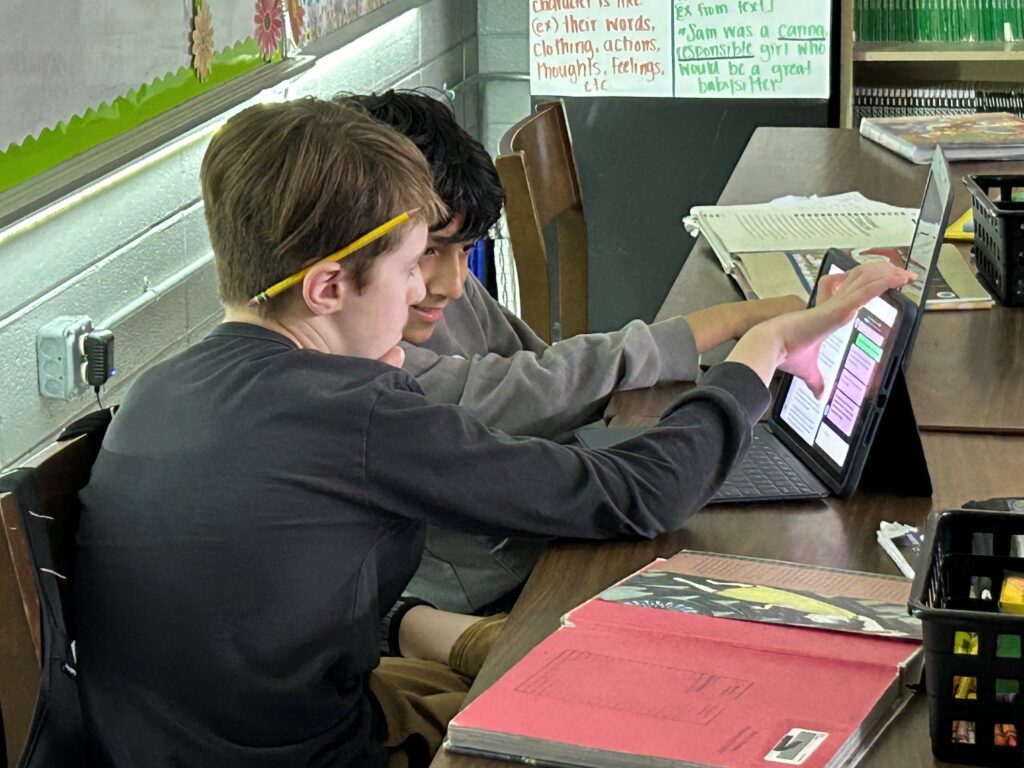
Today, Coursemojo works within many of the top-rated ELA curricula that districts have already adopted. Students receive personalized support as they read, discuss, and write, while teachers gain real-time insight into student understanding and progress.
What has been especially encouraging is the impact we’re seeing. Coursemojo has now been validated through two independent studies that meet the ESSA Tier 2 evidence standard. In Aldine ISD, students using Coursemojo outperformed their matched peers on the state reading assessment by 10 percentage points, with even larger gains among emergent bilingual students and students from low-income backgrounds. In Sumner County, Tennessee, sixth-grade students using Coursemojo improved eight percentage points on the state ELA assessment while performance for non-participating students remained flat. Students with IEPs using Mojo reduced their achievement gap by nearly two-thirds.
For me, the important thing is that technology supports good teaching rather than pulling attention away from it. The classrooms we power are still built around complex and worthy texts, class discussion, writing, and students collaborating and thinking together. The role of well-designed technology is to help more students participate in those experiences successfully.
What is the challenge educators face today that is fixable?
One fixable challenge is helping teachers respond to a much wider range of student needs without lowering expectations for the work itself.
In many classrooms, teachers are trying to support students who are reading above grade level alongside students who are still struggling to access the text. Some students need language support. Some need confidence. Some need more challenge. Teachers are trying to respond to all of that in real time.
What is exciting to me about AI support like Coursemojo is that all students can stay connected to the same text, the same lesson, and the same classroom discussion while receiving different kinds of support based on what they need at that moment. That allows teachers to maintain strong instruction while helping more students stay engaged and successful.
Every student deserves the opportunity to engage with challenging texts and meaningful classroom discussions. The more we can help teachers make that possible, the better outcomes we will see for students.
What is the challenge educators face today that will persist?
The complexity of teaching is always going to persist. I have heard some talk about AI as if it will somehow simplify education into a perfectly efficient system, but classrooms are full of wonderfully diverse human beings.
Students come in with different experiences, different motivations, and different needs – as do teachers. A student might need academic support one day and encouragement or connection the next. A teacher is constantly making those judgments in real time.
That is the part of teaching I do not think technology will ever replace. Strong tools can help teachers see patterns, provide feedback, and support students more effectively, but they cannot build relationships, create trust, or understand the full context of a classroom the way a skilled educator can.
That is one reason I encourage districts not to focus on developing an AI strategy. Rather, they need to be clear on their teaching and learning strategy, and then they should think about how AI can support that vision.
What are the areas of education or training and workforce development that are being overlooked?
The big edtech debate right now is about screen time, and it’s frustrating how many people are overlooking the nuances in that debate.
As a parent and an educator, I understand the concern. I worry about passive scrolling and the social isolation that can come from every individual silently going down their own personalized digital pathway. But when we talk about technology in education, I think we are often asking the wrong question.
The more important questions are: What is the cognitive demand of the task? Is it leading students into the kind of productive intellectual struggle that we know is essential for learning? And what is the social experience? Is it fostering discussion, collaboration, confidence, and human connection?
With AI, education technology can be much better than the “screen time” we have seen in the past. It can be more dynamic, rigorous, and responsive. But that only happens if we intentionally combine the power of AI with rigorous content and build based on what we know about cognitive science and what we want learning to feel like for students and teachers.
I also think we sometimes underestimate the importance of literacy in workforce development. Reading critically, communicating clearly, evaluating information, and expressing ideas effectively are foundational skills in almost every profession. As AI tools become more capable, those skills are not becoming less important. In many ways, they are becoming more important.
What do you foresee will be a challenge in education in three to five years?
In three years, I think the conversation will have shifted even more to the disruption AI is causing in the job market and how best to prepare young people for an AI-powered future. Schools need to lean into this challenge by updating their understanding of the competencies students will need to thrive. My personal take is that most academic knowledge and skills will still matter, and students will need certain human skills more than ever – like communication, creativity, entrepreneurship, collaboration, and leadership. And everyone will need to know how to use a set of AI tools effectively and responsibly. The students who thrive will not be the ones trying to out-compute computers. They will be the ones who can combine strong knowledge, human judgment, and AI tools to solve real problems.