

Will is currently the Vice President at Spindle, where he helps lead the growth and evolution of its technology-enabled education staffing platform. He is passionate about solving one of education’s most pressing challenges: ensuring schools have immediate access to the talented professionals they need to support students. Will specializes in building strategic partnerships, driving operational excellence, and developing solutions that empower school districts while improving the experience for educators and candidates. Throughout his career, he has focused on building relationships, identifying opportunities, and creating scalable solutions that deliver meaningful impact. A former student-athlete, Will graduated from Georgia Southwestern State University and brings the values of discipline, accountability, and teamwork to his work in education staffing.
Tell us about your company and the problem it solves, or its benefit to learners or educators.
Spindle is the only platform in the U.S. exclusively for special education substitute professionals. Our goal is to enable school districts to quickly connect with qualified professionals who provide critical support to students with diverse learning needs. Through our growing network of substitute paraprofessionals, Registered Behavior Technicians, interpreters and nurses, we help schools address staffing gaps while creating flexible opportunities for special education professionals. We’ve helped over 365,000 special education professionals connect to meaningful work and are backed by over 20 years in the special education workforce.
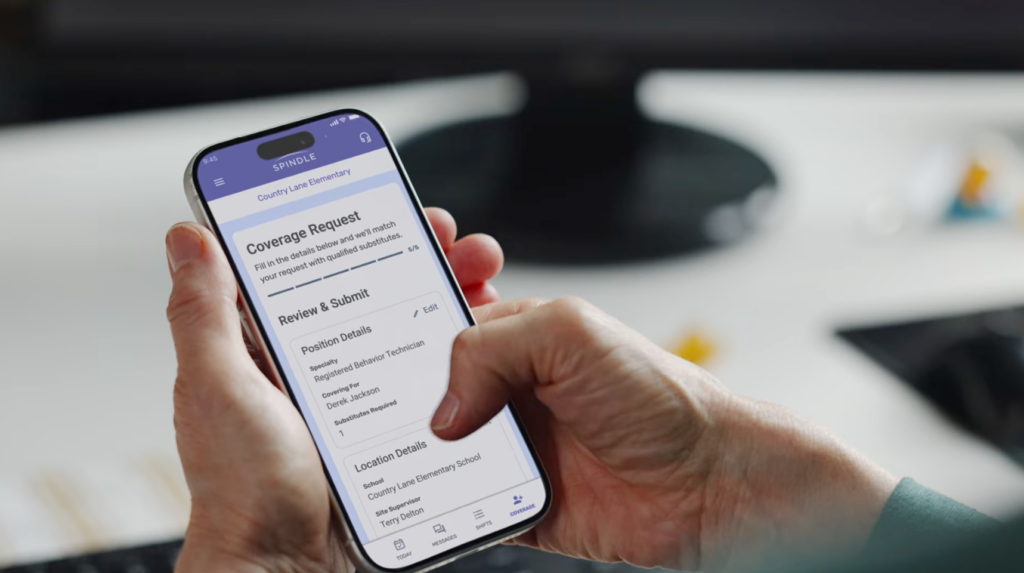
Most recently, we launched the Go Spindle app, which makes it easier for qualified professionals across the country to discover assignments, manage schedules, and stay connected with schools from their mobile devices. By streamlining the substitute staffing process, we aim to help schools respond more efficiently to workforce needs while giving special education professionals easier access to open opportunities to support students.
What is the challenge educators face today that is fixable?
One fixable challenge educators face today is quickly accessing qualified staff when the need arises. According to Soliant’s 2026 School Workforce Trends Report, 28.9% of school professionals said they had considered leaving their role in the past 12 months. That pressure is even more pronounced among special education teachers, with 39.3% saying they had considered leaving, the highest rate among the larger role groups.
These numbers highlight the importance of ensuring schools can more easily fill staffing gaps, particularly for special education roles. Offering flexible scheduling, streamlining the onboarding process, building a reserve list of top-performing substitutes, and using historical data to forecast needs can all help to fill these gaps. The right technology can also make the process of connecting schools with qualified substitute professionals simpler and more manageable. Schools that supplement their internal team with on-demand networks can dramatically reduce unfilled shifts, meaning fewer service delays, fewer compliance flags, and less burnout for full-time staff.
What is the challenge educators face today that will persist?
One challenge that persists for special education professionals is meeting the diverse and evolving needs of each student. Students have different learning styles and support needs, and ensuring they have access to the right qualified professionals remains critical. This is especially important as the demand for special education services continues to grow. There is no one-size-fits-all approach to supporting students, so schools require more effective solutions to connect the right professionals to ensure students receive the services and support they need.
What are the areas of education or training and workforce development that are being overlooked?

One area that is often overlooked is the workforce supporting special education outside of traditional teaching roles. Paraprofessionals, Registered Behavior Technicians, interpreters, speech-language pathologists, nurses and other specialized support professionals play such a critical role in helping students access the specific learning they need. There is an opportunity to invest more attention into recruiting, training, and meeting the needs of specialized professionals.
According to the Soliant report, nearly 3 in 10 respondents selected work-life balance as one of the most important factors when choosing an education job, and school professionals were about 50% more likely to prioritize work-life balance than compensation. For school psychologists in particular, better mental health resources for students ranked significantly higher, at 26.5% compared with 17.2% overall, while professional development opportunities also stood out. These findings reinforce the importance of looking beyond recruitment alone and considering how we can better support, retain, and invest in the specialized professionals who help students with diverse needs succeed.
What do you foresee will be a challenge in education in three to five years?
Over the next three to five years, one of the biggest challenges in education will be ensuring schools have reliable access to qualified professionals who can support the needs of all students, especially those who require specialized support. According to the 2026 Workforce Trends Report, only 12.8% of respondents plan to stay in education until retirement, and 71.6% expect to stay for just 4-10 years. For students needing specific support, continuity of care is crucial. With high turnover among qualified professionals, schools must repeatedly recruit and train staff, which leads to gaps or disruptions in services. As each student is different, these needs can become increasingly complex, meaning schools will have to think beyond simply filling vacancies and focus on building a flexible workforce that can provide the right expertise at the right time. If we can help schools address these staffing issues and subsequent workforce gaps, students will maintain access to the more consistent and specialized support they need.