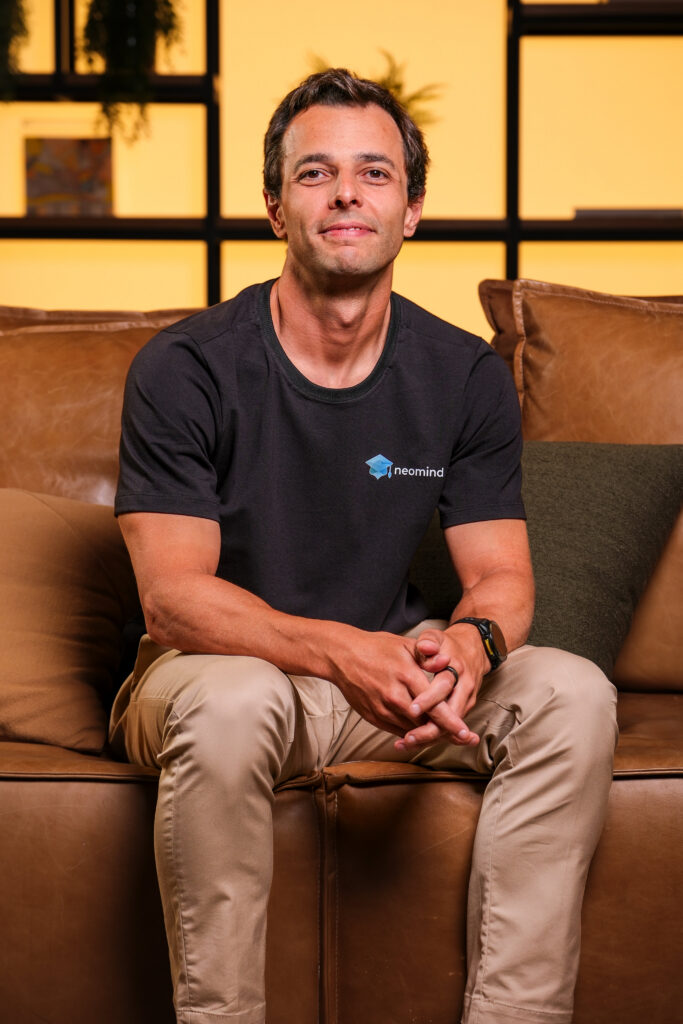
Felipe Hildebrand is co-founder and CEO of Neomind Learning, where he is leading the development of Personal Learning Intelligence to make individualized education more accessible. Before founding Neomind, he spent more than 15 years in strategy and operations, including serving as a partner and head of Technology, Media and Telecommunications for Brazil at Oliver Wyman. His work has spanned technology and telecommunications engagements in more than 10 countries. Felipe holds an MBA from Northwestern University’s Kellogg School of Management and a bachelor’s degree in industrial engineering from UFSCar.
Tell us about your company and the problem it solves, or its benefit to learners or educators.
Neomind Learning was built around a problem that could not be ignored: individualized teaching works, but historically it has been too scarce and expensive to reach most students. The classroom model expanded access to education at enormous scale, but one teacher still has to move a group of students through material at roughly the same pace. When a student misses a foundational concept, that gap can compound because the class has to keep moving.
We are using AI to make a high-quality one-to-one learning experience far more accessible. The goal is not to give students faster answers. It is to understand where a learner actually is, identify the prerequisite knowledge behind a struggle, and adapt the instructional path around that student. In other words, the system should do the work of understanding the learner so the learner can keep doing the work of thinking.
At the center of Neomind is our Learning Genome, an evolving model of how a student reasons, learns and progresses. Our Instructional Mentor uses that understanding to decide where to begin, how to explain a concept, when to revisit a prerequisite and when the student is ready for more challenge. The experience also gives parents greater visibility into progress so they can support learning without having to reconstruct what happened weeks later from a grade report.
That distinction matters to me. AI can make completing schoolwork easier, but completion is not the same as learning. We want technology to preserve the productive struggle, reflection and reasoning that cause knowledge to stick while making individualized support available to families who historically could not afford a private tutor.
Where did the idea come from to create your company?
The idea became personal when my daughter moved to a new school and was learning in English, which is not her first language. She was at an excellent school with caring teachers, yet I could see her beginning to lose ground in math. What I could not easily see was where the difficulty had started or what support would actually help her recover. I tried the resources available to families and found many useful tools, but very little that could form a real understanding of an individual learner and then teach from that understanding.
At the same time, after roughly 17 years in strategy consulting, I was thinking deeply about what the current shift in AI could make possible. Most conversations were about doing existing work faster or more efficiently. I became much more interested in where AI could remove a constraint that had previously been impossible to overcome.
What became clear to me was that the limitation in education was structural. A classroom teacher has to divide attention across many students, each of whom may be missing something different. Even an excellent teacher cannot stop the entire class every time one student needs to go back two steps or hear an idea explained another way.
That made me think differently about AI. Rather than focusing on using it to make education tools faster or more efficient, I started asking whether it could change what was possible: could we give each learner the individual attention and adaptability that have historically been difficult to provide at scale?
That became the founding question for Neomind. Could we build something that understands where a student is, adapts to what that individual needs and delivers that level of personalized teaching at a price accessible to far more families? My co-founders brought complementary experience across education, entrepreneurship and technology, and we saw an opportunity to design a new approach around that problem.
Tell us about one challenge and how you overcame that challenge.
One challenge has been entering the market at a moment when almost every AI product for students can be described as an “AI tutor.” That label now covers very different experiences, from general-purpose chatbots and homework helpers to platforms designed around instruction. For families and educators, it can be hard to tell whether a product is helping a student learn or simply helping a student finish.
We decided the best response was not to compete on the label, but to become much more precise about the learning experience we were trying to create. A student who is already struggling should not also have to be an expert at writing prompts, diagnosing their own misconception and evaluating whether an AI response is pedagogically sound. That reverses the responsibility. A tutor should be able to meet the learner where they are.
So we built Neomind to begin with understanding rather than answering. The system looks for the knowledge underneath the immediate problem, calibrates what the student has actually mastered and can move backward to repair a prerequisite before moving forward again. It also learns which forms of explanation and practice are most effective for that individual over time.
That challenge ultimately sharpened our category thinking. We use the term Personal Learning Intelligence because the most important intelligence is not simply the model’s ability to generate content. It is the platform’s growing ability to understand one learner well enough to make better instructional decisions for that learner.
What are you most proud of or what is your company’s greatest achievement?
I think about our greatest achievement in two parts. The first is the product itself. We set out to see whether we could deliver something much closer to world-class individualized instruction at a price that could be realistic for ordinary families, rather than preserving that level of support for a small group that can spend hundreds or thousands of dollars on tutoring. Reaching the point where students and families can now use what we have spent more than a year building is a meaningful milestone because accessibility was central to the mission from the beginning.
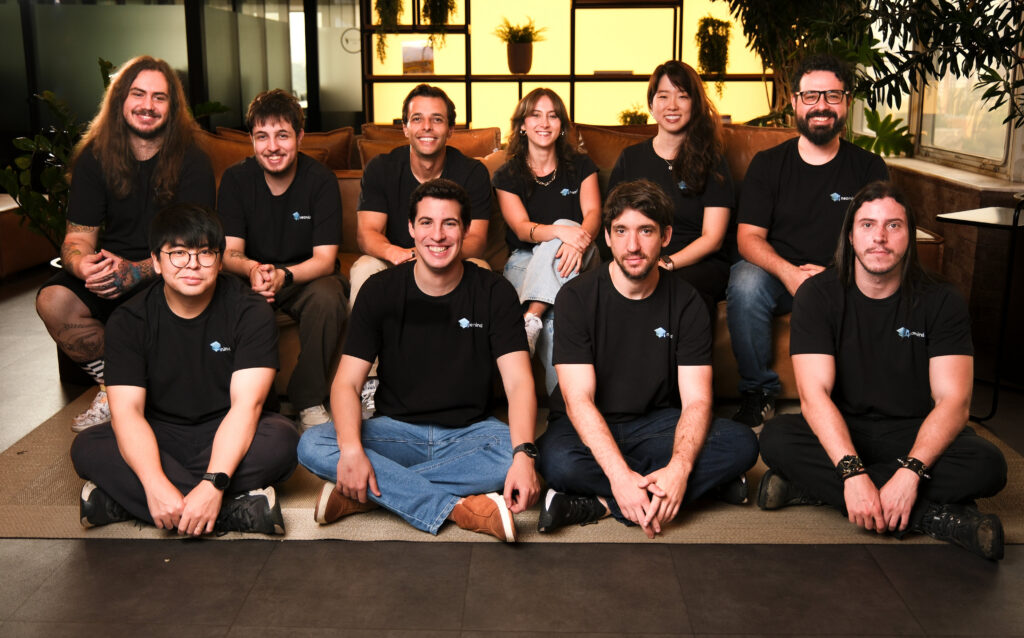
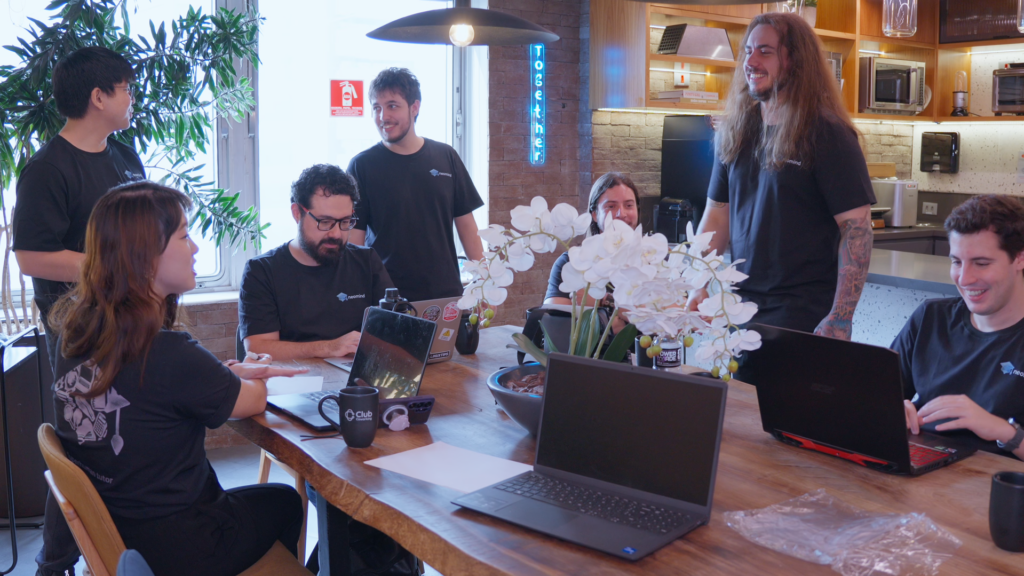
The second is the team behind it. We are now about 30 people, and Neomind only works because education and technology are being built together rather than in separate lanes. Pedro, my co-founder and CTO, brings deep expertise in AI, data science and technology. Dr. Tracy Ocasio, our Chief Learning Officer, brings nearly four decades of experience across K–12 education. My background is in strategy, technology and building businesses, and across the broader team we have educators, engineers, product leaders and technologists working on the same learning problem.
I am especially proud that we have resisted the temptation to treat learning science as something to add after the technology is built. The instructional approach, the way the system diagnoses gaps and the way it adapts to a student all have to be grounded in how people actually learn. Turning that multidisciplinary work into a real experience that can reach families is the achievement I am proudest of so far.
Where do you see your company in five years?
In five years, I hope Neomind has grown from math K-12 into what we think of as a “Learn Everything” platform, expanding to all subjects and to Higher Education and Lifelong Learning.
I also want that reach the 1 billion K-12 students across the globe. The scarcity problem we are trying to address is not unique to the United States, in fact it is even more acute in the developing world. If we can lower the cost of delivering strong one-to-one support while maintaining educational quality, the impact should not stop at geographic borders.
The third part of the vision is much deeper partnership with schools and districts. I do not see technology replacing teachers or classrooms. I see an opportunity for individualized support outside or alongside the classroom to become far more connected to what is happening inside it, with schools able to align the experience to curriculum, understand where students are struggling and use those insights to strengthen instruction.
Ultimately, success would mean individualized learning no longer feels like a premium service. Great teachers, engaged parents and strong schools will remain essential. Our role is to give them another layer of support that can pay close attention to one learner at a time and make that level of attention available much more broadly.